How Afrobeats Took Over the American Dance Floor — And It's Not Slowing Down
How Afrobeats Took Over the American Dance Floor — And It's Not Slowing Down
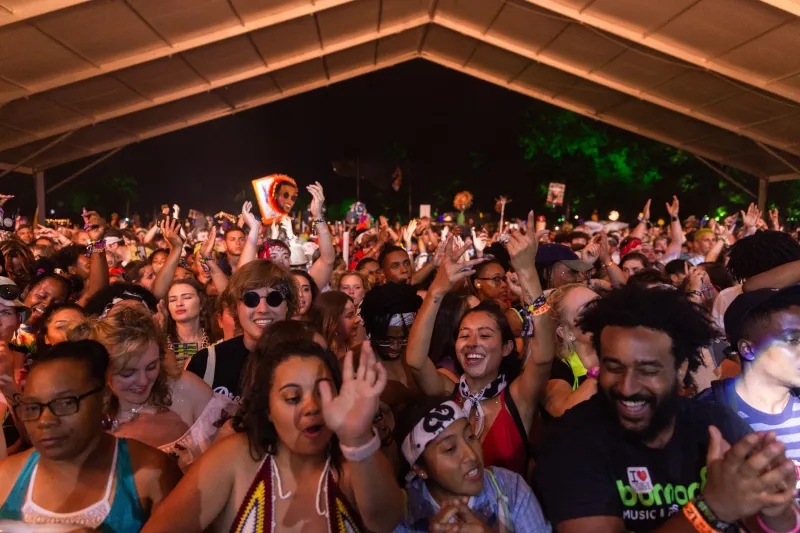
If you've been to a house party, a rooftop bar, or a music festival in the US over the last few years, chances are you've heard it — that irresistible rhythmic pulse, the layered percussion, the melodic vocals that somehow feel both brand new and deeply familiar. That's Afrobeats, and it's not just a trend. It's a full-blown cultural takeover.
At Kral38 Stream, we're all about tracking how music moves across borders and lands in your ears, no matter where you are. And right now, Afrobeats is one of the most exciting stories in global music — especially for American listeners who are just now realizing they've been missing out.
So, What Exactly Is Afrobeats?
First things first — let's clear up a common mix-up. Afrobeats (with an "s") is not the same as Afrobeat (without). Afrobeat is the legendary genre pioneered by Fela Kuti in Nigeria during the 1970s — a politically charged fusion of jazz, funk, and traditional African rhythms. Afrobeats, on the other hand, is a broader, more contemporary umbrella term that emerged in the 2000s and 2010s, drawing from highlife, hip-hop, dancehall, R&B, and electronic music.
The result? A sound that's incredibly danceable, emotionally rich, and almost impossible to define in a single sentence. That's kind of the point.
The Lagos Connection: Where It All Started
Nigeria's commercial capital, Lagos, is the beating heart of Afrobeats. The city's nightlife scene — places like Quilox and Eko Hotel — became incubators for a generation of artists who were blending Western influences with distinctly West African sonic identities. Artists like Wizkid, Davido, and Burna Boy were selling out arenas in Lagos and Accra long before most American radio stations had any idea who they were.
But the music was already traveling. Nigerian diaspora communities in cities like Houston, Atlanta, New York, and London were carrying these sounds with them — playing them at cookouts, house parties, and cultural events. For years, Afrobeats had a thriving underground presence in the US that mainstream media largely ignored.
That was about to change.
The Streaming Algorithm Did the Heavy Lifting
One of the biggest catalysts for Afrobeats breaking into the American mainstream wasn't a radio campaign or a major label push — it was the streaming algorithm. Spotify and Apple Music began featuring Afrobeats playlists more prominently around 2018 and 2019, exposing the genre to millions of listeners who had never actively sought it out.
Wizkid's collaboration with Drake on "One Dance" back in 2016 was an early signal that something was shifting. That track hit number one in the US, UK, and Canada, and it introduced Afrobeats' rhythmic DNA to a massive global audience — even if most people couldn't name the genre at the time.
Then came the TikTok era, and everything accelerated.
TikTok, Virality, and the New Music Discovery Pipeline
TikTok has completely flipped how Americans discover new music, and Afrobeats was perfectly engineered — almost accidentally — for the platform. The genre's danceable beats and infectious hooks translate incredibly well to short-form video, and dance challenges built around Afrobeats tracks spread like wildfire.
Burna Boy's "Ye" became a TikTok phenomenon. Tems' haunting vocals on Wizkid's "Essence" turned into one of the most viral moments of 2021, eventually earning a remix featuring Justin Bieber that pushed the track into heavy US radio rotation. Suddenly, Afrobeats wasn't underground anymore — it was everywhere.
Festival bookings followed almost immediately. Burna Boy headlined major US stages. Wizkid sold out Madison Square Garden. The genre had officially arrived.
Why American Listeners Are Connecting So Deeply
It's worth asking: why now? Why did Afrobeats break through in the US at this particular moment?
A few things converged. American audiences — especially younger listeners — have become significantly more open to non-English music, partly thanks to the K-pop wave and the Latin music explosion led by artists like Bad Bunny. The cultural appetite for global sounds is genuinely at an all-time high.
There's also an emotional quality to Afrobeats that resonates across cultural lines. The genre often blends celebratory energy with introspective lyrics, creating music that feels both euphoric and deeply personal. Burna Boy's Grammy-winning album Twice as Tall is a perfect example — it's party music that also has something to say.
And honestly? People just want to dance. Afrobeats delivers on that every single time.
Your Essential Afrobeats Starter Pack
If you're ready to dive in — and you should be — here's where to start on Kral38 Stream and your favorite streaming platforms:
Burna Boy — Start with Twice as Tall (2020) and work your way back to African Giant (2018). His sound is cinematic, politically aware, and absolutely infectious. "Ye," "Anybody," and "Kilometre" are essential listens.
Wizkid — Made in Lagos (2020) is one of the most cohesive albums the genre has produced. "Essence" (featuring Tems) is non-negotiable. "Ginger" and "Reckless" are equally brilliant.
Tems — Her voice is genuinely one of the most distinctive in music right now, full stop. Start with her EP For Broken Ears and then catch her feature on Future's "Wait for U," which also includes a Beyoncé sample and hit the top 10 in the US.
Davido — If you want pure, unfiltered Afrobeats energy, Davido is your guy. "Fall" became one of the longest-charting Nigerian pop songs in Billboard history. "If" and "Risky" (featuring Popcaan) are crowd favorites.
Rema — The youngest voice on this list, but arguably the one generating the most buzz right now. "Calm Down" with Selena Gomez became a genuine crossover smash in 2023, spending months on the Hot 100.
Fireboy DML — His collaboration with Ed Sheeran on "Peru" introduced him to millions of new listeners. His album Playboy is worth your full attention.
What's Next for Afrobeats in America?
The momentum isn't slowing down. More Afrobeats artists are signing with major US labels, more collaborations with American superstars are in the pipeline, and the genre's influence is bleeding into mainstream pop and R&B production in ways that are already shaping the sound of American music — even when listeners don't realize it.
At Kral38 Stream, we think of Afrobeats as one of the clearest examples of what happens when great music finally gets the infrastructure it deserves. The songs were always there. The talent was always there. Now the world is finally paying attention.
Turn it up.