Beat Science: How American Producers Are Rewiring Their Brains With Foreign Phonetics
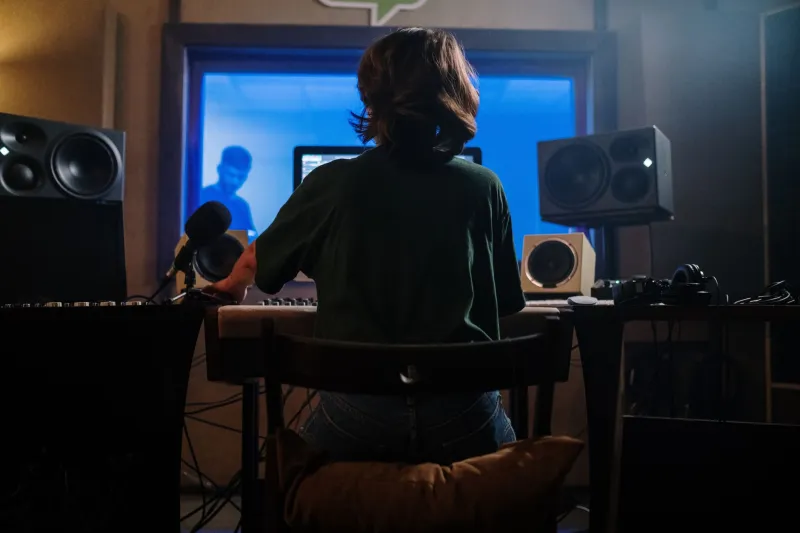
Something weird is happening in recording studios across Los Angeles, Atlanta, and New York. Producers — the people who usually live and die by drum patterns and bass frequencies — are sitting down with language tutors. Not because they're planning a move abroad. Because they've figured out that the way a language sounds changes everything about how a song feels.
It sounds niche. It's actually becoming one of the most talked-about creative shifts in the industry right now.
Why Phonetics? Why Now?
For a long time, American producers working on international collabs basically treated foreign-language vocals like an exotic instrument — something that added flavor without requiring deep understanding. The producer would lay down a beat, the international artist would hop on it, and everyone would call it a fusion record.
But that approach has limits. And a growing number of producers have started hitting those limits hard.
The issue is rhythm. In English, stress patterns are relatively predictable — most words have a natural beat-friendly cadence that maps onto 4/4 time without too much friction. But in tonal languages like Mandarin or Vietnamese, the pitch of a syllable is part of its meaning. In languages like Arabic or Hindi, vowel length carries enormous weight. When you build a beat without understanding those mechanics, you're essentially asking a vocalist to fight the track instead of ride it.
Producers who've started studying these patterns describe it as unlocking a completely different dimension of music-making.
Case Study: Working in Amharic and Yoruba
Several producers who've worked extensively with Ethiopian and Nigerian artists have talked publicly about how learning even basic phonetic structures in Amharic and Yoruba changed the way they approached drum programming. Yoruba, for instance, is a tonal language with three distinct tones — high, mid, and low. When you know that going in, you start thinking about where the kick drum lands relative to where a syllable peaks. You stop placing hi-hats based on habit and start placing them based on where the language naturally breathes.
The result? Tracks that feel locked in rather than layered on top of each other. Artists who work with producers who understand their language often describe the experience as collaborative in a way that cross-language sessions rarely are.
This isn't just an artistic benefit. Commercially, it matters. American audiences may not speak Yoruba, but they feel the difference between a track that's cohesive and one that's fighting itself.
The Portuguese Problem — and Breakthrough
Brazilian Portuguese has been a particularly rich case study for US producers getting into the linguistics game. The language has a rolling, vowel-heavy quality that English simply doesn't share, and for years, American-produced tracks featuring Brazilian artists often felt slightly off — not bad, just misaligned.
Producers who started studying Brazilian Portuguese phonetics — specifically the way unstressed vowels get swallowed and how certain consonant clusters create rhythmic pockets — started making very different choices. Tempo selections shifted. The density of percussion elements changed. Melodic hooks were designed to leave space where the language naturally expanded rather than filling every gap with sound.
Some of the most infectious Brazilian-American collabs of the past few years share this quality: they don't sound like an American beat with a Brazilian vocalist dropped on top. They sound like something that grew from both places at once.
Learning to Think in Sound, Not Words
What's interesting is that the producers doing this work aren't necessarily becoming fluent speakers. They're becoming fluent listeners. The goal isn't to understand what a lyric means — it's to understand how it moves.
Some are using linguistics software to map phoneme patterns. Others are spending time with YouTube videos of native speakers just talking — not singing — so they can hear the natural music of everyday speech. A few have started working with academic linguists as creative consultants, which even five years ago would have seemed absurd in a commercial production context.
The results are showing up in the data, too. Tracks built with this kind of intentional phonetic awareness tend to perform better internationally without losing American audiences. They sit in a sweet spot that feels genuinely global rather than culturally vague.
What This Means for the Future of American Production
Here at Kral38 Stream, we spend a lot of time tracking how global music travels — and what we're seeing is that the most durable cross-cultural hits aren't accidents. They're the product of producers who did their homework in ways that go way beyond listening to a few reference tracks.
The phonetics-first approach is still pretty underground in the industry. Most major label sessions aren't built around linguistic analysis. But the producers who are doing it are getting results that are hard to argue with — and word travels fast in studio culture.
The next wave of American music probably isn't going to sound more foreign. It's going to sound more intentional. And that intention is going to come, at least in part, from producers who finally sat down and learned how other languages actually work — not to translate them, but to let them teach.
That's a different kind of education. And it's making for a different kind of music.