Fifteen Seconds to Famous: How TikTok Is Handing Out Global Music Visas No Radio Station Ever Would
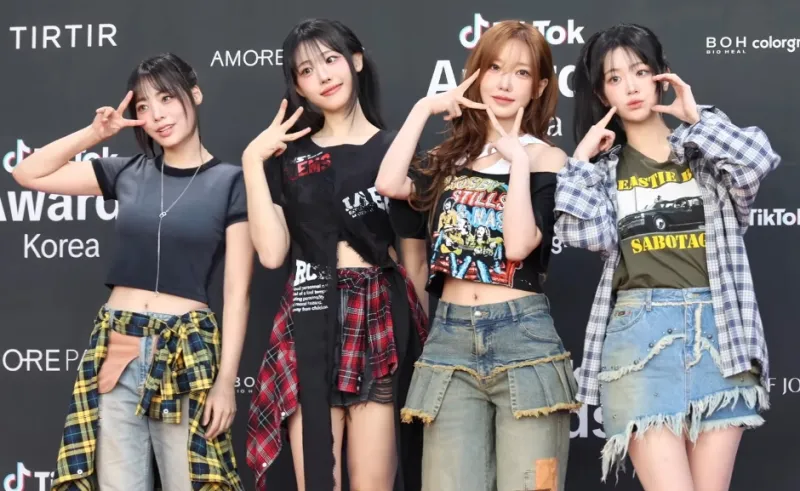
Photo: 티비텐 TV10, CC BY 4.0, via Wikimedia Commons
Somewhere between a lip sync and a thirst trap, a genre you've never heard of just got 40 million views. That's the TikTok music economy in a nutshell — chaotic, unpredictable, and genuinely more democratic than anything the traditional music industry ever built.
For decades, if you wanted American ears on your music and you weren't from the UK, Canada, or maybe Jamaica, you needed a major label, a radio promoter, and a lot of luck. The gatekeepers were real, and they had very specific ideas about what the US market was ready for. TikTok didn't just crack that gate open — it kind of bulldozed the whole fence.
The Algorithm Doesn't Know What "Too Foreign" Means
Here's the thing about TikTok's For You Page: it optimizes for engagement, not origin. A track from Lagos or Manila doesn't get penalized for not being in English. If the sound hits in the first two seconds and someone loops it, the algorithm pushes it further. That's a fundamentally different logic than radio, which historically required artists to be signed, promoted, and formatted before a single American listener ever pressed play.
Nigerian drill is one of the clearest examples of this shift. Artists like Lil Durk-influenced acts operating out of Lagos have built followings in the US not through traditional press cycles but through sound-on clips — workouts, fashion transitions, reaction videos — where the music becomes the hook before anyone even Googles who made it. The song travels first. The artist's identity follows.
Philippine Original Pilipino Music, better known as OPM, has had a similar trajectory. Filipino-American communities on TikTok started sharing nostalgic OPM cuts alongside newer acts, and the algorithm — seeing engagement from users outside that demographic — started surfacing the content to broader audiences. Artists like Arthur Nery and Zack Tabudlo now have US listener bases that would have been nearly impossible to build through conventional channels just five years ago.
Thai Funk and the Surprise Factor
If you want to understand just how weird and wonderful the TikTok music pipeline can get, look at the resurgence of Thai funk and molam — traditional northeastern Thai music that got electrified in the '70s and '80s. Reissue labels and music archaeologists had been digging through this catalog for years, but it took a handful of TikTok videos using vintage molam tracks as background audio for the genre to reach American Gen Z listeners who had never thought about Thai music a single time in their lives.
The pattern is almost always the same: someone uses a track in a video for aesthetic or emotional reasons, not because they're trying to introduce a genre. The clip does numbers. Comments fill up with "what is this song?" The artist or their label (if one exists) gets a spike on Spotify. Music journalists notice the spike. The cycle completes itself in about two weeks, which is roughly the same amount of time it used to take a radio promo team just to schedule a meeting.
Gen Z Doesn't Need a Tour Date to Care
Older millennials and Gen X discovered international music largely through physical proximity — a foreign exchange student's playlist, a world music section at a record store, a late-night MTV2 block. The relationship was mediated by gatekeepers at almost every step. Gen Z's relationship with global music is fundamentally different because it skips the mediation entirely.
They're not waiting for a US tour or a late-night television performance. They find a song on TikTok, add it to a playlist on Spotify, and stream it alongside their favorite domestic artists with zero friction. The idea of a "foreign" artist is almost an anachronism to a generation that has grown up consuming content from everywhere simultaneously.
Music industry insiders are paying close attention. A&R teams at major labels now have people specifically monitoring TikTok virality in non-English-speaking markets, looking for the next wave before it crests. Independent distributors like DistroKid and TuneCore have reported significant upticks in sign-ups from artists in Southeast Asia, West Africa, and Latin America who are explicitly targeting US TikTok audiences as their primary growth strategy.
The Flip Side: Virality Without Context
It's not all good news. When a song goes viral on TikTok without its cultural context, things can get complicated. A Nigerian artist might blow up in the US, but American listeners often have no idea what the lyrics mean, what tradition the music comes from, or what the artist is actually trying to say. The song becomes a vibe, detached from its roots.
For some artists, that's fine — reach is reach, and streaming revenue doesn't discriminate. For others, the decontextualization feels like a kind of erasure. The music gets celebrated while the culture behind it stays invisible.
Platforms like Kral38 Stream are part of a growing ecosystem trying to bridge that gap — giving listeners not just the music but the story behind it, so that a 15-second clip can be the beginning of a genuine discovery rather than just a momentary scroll.
What Comes Next
The TikTok pipeline is only getting faster. As the platform expands its music licensing infrastructure and more international artists understand how to engineer their releases for short-form virality, the volume of global music reaching US ears is going to keep climbing. Genres that don't even have English-language Wikipedia pages are going to start charting on Billboard.
Radio isn't dead, but its monopoly on introduction is. The passport to American audiences used to be a label deal and a distribution contract. Now it's a good hook, a compelling visual, and 15 seconds of someone's attention. That's a low bar, and the whole world is clearing it.