Warehouse Walls Are Shaking: The Balkan Underground Sound Taking US Festivals by Storm
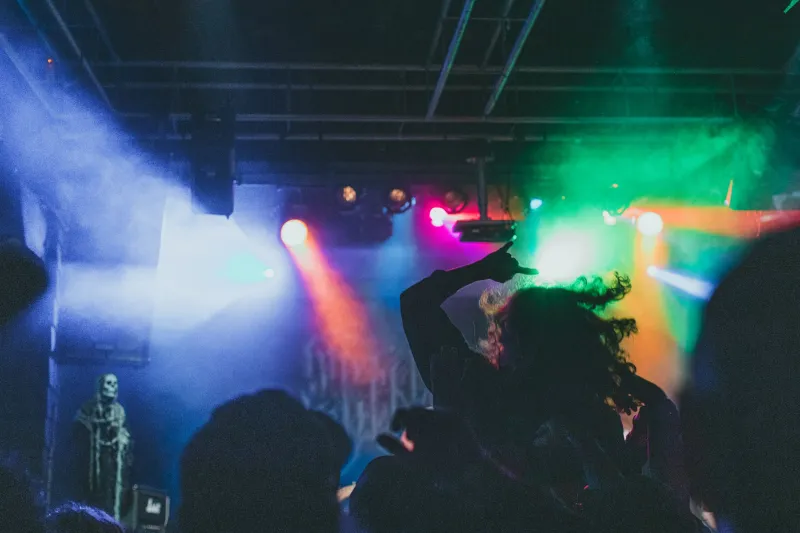
There's a specific moment that happens at certain underground raves these days. The DJ drops something that sounds vaguely familiar — a brass stab, a wailing melody, a rhythm that feels ancient and futuristic at the same time — and the crowd loses it. Not the polished, Instagram-ready kind of losing it. The sweaty, disoriented, where has this music been my whole life kind.
That sound has a home address: the Balkans.
While the conversation around global music going mainstream tends to center on K-pop and Afrobeats, something grittier and harder to categorize has been bubbling up through the cracks of American underground festival culture. Producers and DJs from Serbia, Bosnia, Croatia, and North Macedonia are building a sound that's equal parts folk memory and rave-ready aggression — and it's starting to show up in the sets of some of the most respected tastemakers in US club culture.
What Does Balkan Bass Actually Sound Like?
If you're trying to picture it, start by throwing out most of your reference points.
Balkan bass isn't a clean genre with a Wikipedia page and a Spotify editorial playlist (at least not yet). It's more of a collision. Imagine the hypnotic, irregular time signatures of traditional Balkan brass music — the kind you'd hear at a Serbian wedding or a Romani celebration — filtered through the lens of heavy techno production, dubstep-weight bass drops, and the kind of dark, atmospheric sound design that feels at home in a Berlin warehouse.
The rhythms are often in odd meters: 7/8, 9/8, 11/8. That's part of what makes it so disorienting and addictive. Your body wants to find the beat, keeps almost finding it, and then it shifts again. It creates this physical tension that's almost impossible to stand still through.
Producers like Dejan Milićević and collectives operating out of Belgrade's underground scene have been refining this approach for years — layering traditional instruments like the gaida (a Balkan bagpipe) and tupan drums over modern synthesis, creating tracks that feel simultaneously ancient and completely contemporary.
How It's Landing in America
The pipeline from Balkan underground to American festival culture isn't as random as it might seem.
A lot of it starts with the Eastern European diaspora communities in cities like Chicago, New York, and Detroit. These communities have always maintained connections to Balkan music traditions — whether through cultural events, community radio, or just family. But what's shifted recently is that younger members of those communities, who grew up equally fluent in American rave culture, started bringing the two worlds together.
From there, it spread the way most underground music spreads: through DJs. American electronic music producers who travel internationally for gigs — particularly those plugged into the Berlin and Amsterdam scenes — started coming home with Balkan bass tracks in their sets. When those tracks hit at underground events in places like Brooklyn's warehouse district or the DIY festival circuit in the Pacific Northwest, people started asking questions.
Streaming has accelerated things considerably. Platforms like Kral38 Stream have made it genuinely easy for a 22-year-old in Austin who's never been to the Balkans to stumble onto a Serbian producer's SoundCloud and spend three hours going down the rabbit hole.
The Festival Circuit Is Paying Attention
It's not just happening in warehouses. Some of the more adventurous American festival bookers — particularly those focused on underground electronic music — have started actively seeking out Balkan acts.
Festivals that built their reputations on showcasing global electronic music before it went mainstream are now including sets from Balkan producers alongside established names. The reaction, by most accounts, is consistently strong. There's something about the physicality of the music — the weight of the bass combined with those winding, almost dissonant melodies — that translates across cultural backgrounds in a way that surprises even the artists performing it.
One recurring observation from American attendees: the music feels emotional in a way that a lot of electronic music doesn't. There's grief in it, and joy, and something that's hard to name but feels very human. That's not an accident. Balkan musical traditions have always carried a kind of emotional intensity — music used to mark weddings, funerals, harvests, wars. That weight doesn't disappear just because you've put a 4/4 kick drum underneath it.
The Producers You Should Know
If you want to get ahead of this before it goes fully mainstream, here's where to start digging.
The Belgrade scene is arguably the most active right now, with a cluster of producers who release on small European labels and increasingly on digital platforms accessible in the US. Look for artists who describe their work as turbo-folk fusion or Balkan techno — both terms are used loosely, but they'll get you into the right corner of the internet.
Bosnian producers have been doing interesting work blending Sevdalinka — a traditional Bosnian music style known for its melancholic, ornate vocal style — with contemporary electronic production. The results are some of the most emotionally affecting music in the space.
Croatian artists, meanwhile, have leaned more heavily into the Mediterranean side of the Balkan sound, incorporating lighter, more melodic elements that give their productions a slightly different texture.
Why This Moment Feels Real
Every few years, someone claims that some regional underground sound is about to break into the American mainstream, and usually it doesn't — at least not in the way the prediction suggests. So it's worth asking: what's different about Balkan bass?
A few things stand out. First, the timing aligns with a broader exhaustion in American club culture with certain dominant sounds. There's a real appetite for something that feels genuinely strange and challenging rather than polished and algorithmic.
Second, the music has real structural depth. This isn't novelty. The rhythmic complexity alone gives DJs and producers something to actually engage with intellectually, which tends to create longer-lasting enthusiasm than a trend based purely on surface aesthetics.
And third — honestly — the bass is just undeniable. Whatever cultural context you're bringing to a warehouse at 2 AM, when those frequencies hit the right system, something primal takes over.
Keep your ears open. The walls are already shaking.