Cold Skies, Hot Bars: Why Scandinavian Rap Is the Underground Story American Music Fans Are Sleeping On
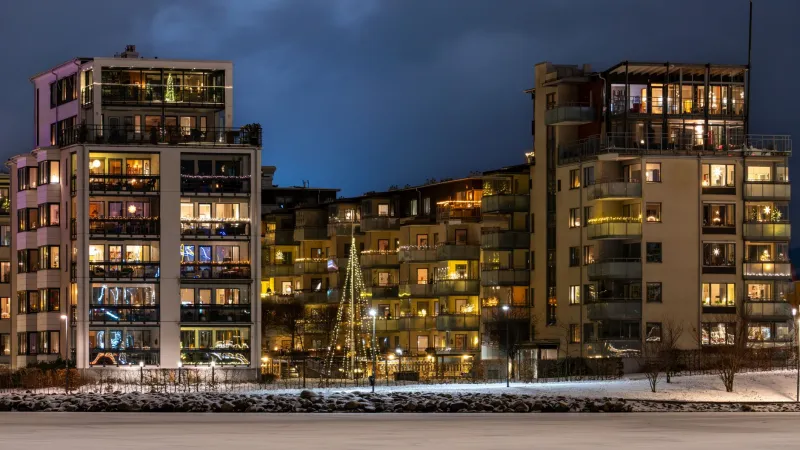
Here's a question that would have sounded absurd about fifteen years ago: what if some of the most compelling hip-hop being made right now is coming out of Sweden?
Not absurd anymore. Not even close.
The Scandinavian rap scene — spanning Sweden, Norway, and Denmark, with distinct but connected scenes in each country — has been developing with remarkable creative intensity over the past decade. What's happening there now isn't a novelty act or a novelty geography story. It's a genuine artistic movement producing music that's innovative, emotionally complex, and increasingly audible on US college radio stations and streaming playlists.
American hip-hop remains the genre's dominant cultural force. Nobody's arguing otherwise. But dominance and innovation aren't the same thing, and right now some of the genre's most interesting experiments are happening in cities that get about five hours of winter sunlight.
The Sound of Permanent Twilight
If you want to understand Scandinavian rap, start with the weather. That's not a glib observation — it's actually key to understanding why the music sounds the way it does.
The Nordic countries produce a specific kind of introspective, melancholic art. This is the region that gave the world Ingmar Bergman films and death metal and the particular literary tradition that American publishers have been calling Nordic noir for the past two decades. That sensibility doesn't disappear when the art form is hip-hop.
Scandinavian rap tends to sit in a darker emotional register than much of contemporary American hip-hop. The production leans toward sparse, atmospheric, and often genuinely unsettling — lots of minor keys, lots of space, textures that feel cold in a tactile way. Beats built around ambient pads and distant piano lines rather than the maximalist 808 stacks that dominate American trap.
The lyrical content tends toward the introspective and confessional in a way that feels closer to early 2000s American underground rap than to anything currently charting. There's a lot of examination of identity, belonging, immigration (Scandinavia has significant immigrant communities whose children are now making music), mental health, and the particular alienation of growing up between cultures.
Sweden's Rap Scene: More Than a Punchline
Sweden has a complicated relationship with hip-hop in the American cultural imagination. For a while, the conversation started and ended with certain pop-adjacent acts that were more interesting as commercial curiosities than as artistic statements.
That's not the story anymore. Stockholm and Gothenburg have developed scenes that are producing genuinely respected work. Swedish-language rap has moved beyond the early period where artists were essentially translating American styles wholesale and has developed its own grammatical and rhythmic logic — working with Swedish's particular cadences and sounds in ways that create something that couldn't exist in English.
Artists like Silvana Imam, who blends feminist politics and queer identity with intense, almost confrontational delivery, represent one end of the spectrum. At the other end, producers working in what Swedish music journalists call svensk drill are adapting the British drill format with local cultural references and a distinctly colder production aesthetic.
Norway and Denmark: Different Angles on the Same Questions
Norwegian hip-hop has its own distinct character, shaped partly by Oslo's specific geography — a relatively small city with a significant immigrant population concentrated in particular neighborhoods, creating the kind of close-quarters cultural mixing that has historically produced interesting music.
The Norwegian scene has been particularly good at the kind of raw, autobiographical storytelling that feels genuinely high-stakes rather than performed. There's a tradition in Norwegian rap of lyrical specificity — naming real places, real situations, real people — that gives the music a documentary quality that's compelling even when you're encountering it as an outsider.
Denmark's rap scene has arguably been the most internationally adventurous, with Copenhagen artists more likely to code-switch between Danish and English and to explicitly engage with American and British hip-hop traditions while maintaining a distinct local identity. The Danish scene has also been particularly receptive to genre experimentation — blending rap with electronic music, jazz, and even folk elements in ways that feel organic rather than forced.
How American Ears Are Finding It
The pathway for Scandinavian rap into US consciousness is narrower than for some other global music trends, but it's real and it's growing.
College radio has been a consistent early adopter. Music directors at stations associated with universities that have strong international student populations — particularly in cities like Boston, New York, and Minneapolis — have been incorporating Scandinavian rap into programming for a few years now. The response from listeners has been curious and engaged rather than dismissive.
Streaming algorithms, again, are doing a lot of work. Listeners who engage heavily with introspective, production-forward American rap — the kind of underground and alternative hip-hop that lives in the same sonic neighborhood as artists like JPEGMafia or billy woods — are increasingly being surfaced Scandinavian music by recommendation engines that recognize the aesthetic kinship.
Music journalists and critics have started paying attention too. A handful of pieces in respected American music publications over the past two years have profiled Scandinavian rap scenes, and the critical reception has been notably warm — not the condescending surprisingly good for Europeans framing of earlier coverage, but genuine engagement with the music on its own terms.
Kral38 Stream has been tracking this movement closely, and the engagement numbers from American users discovering Nordic rap through the platform's recommendation features have been consistently encouraging.
The Language Question, Answered Differently
Unlike the Bollywood situation, where the music's emotional directness tends to override the language barrier almost immediately, Scandinavian rap requires a slightly different kind of openness from American listeners.
Rap is a lyric-forward form. The language matters in a different way than it does in music where the vocal is primarily melodic. American listeners who engage with Swedish or Norwegian rap are making a conscious choice to receive the music differently — to focus on flow, cadence, and sonic texture rather than semantic content.
Interestingly, this is exactly the kind of engaged, active listening that the most dedicated hip-hop fans tend to be good at. The American listeners who are finding Scandinavian rap tend to be people who already listen closely, who pay attention to production details, who are interested in how language sounds as music.
That's a smaller audience than the one that casually streams Bollywood tracks. But it's a deeply engaged one, and in music, deep engagement tends to be more durable than casual curiosity.
Why Pay Attention Now
The Scandinavian rap scene isn't going to replace American hip-hop. That's not the point and it's not the claim.
The point is that hip-hop has always been a global conversation, and some of the most interesting responses to that conversation are happening in languages most Americans don't speak, in cities most Americans couldn't locate on a map. That's not a reason to ignore them. If anything, it's the most compelling reason to seek them out.
The cold skies are producing some genuinely hot music. Start listening.