Strange Strings and Honest Words: The Eastern European Singer-Songwriters Taking Over Your Discover Weekly
Your Algorithm Found Something You Didn't Know You Needed
Maybe it showed up at the end of a late-night playlist. Maybe a friend sent you a TikTok of someone playing a stringed instrument that looked vaguely like a lute but sounded like it was invented specifically to make you feel things. However it happened, there's a decent chance you've already had your first encounter with the wave of indie folk artists emerging from Eastern Europe and the Balkans — and there's an equally decent chance it stopped you in your tracks.
This isn't a trend that got manufactured in a label conference room. It's something stranger and more organic than that. Artists from Bulgaria, Ukraine, Serbia, and neighboring countries have been quietly releasing music that connects with American indie listeners in ways that feel almost inexplicable given how different their cultural contexts are. And the numbers are starting to reflect it.
The Sound That Doesn't Sound Like Anything Else
Western indie folk has a very recognizable palette at this point. Acoustic guitar. Earnest vocal delivery. Lyrics about driving at night or feeling disconnected in a city. It's not that the music is bad — it's that it's become predictable. Listeners who grew up on Bon Iver and Phoebe Bridgers know every move before it happens.
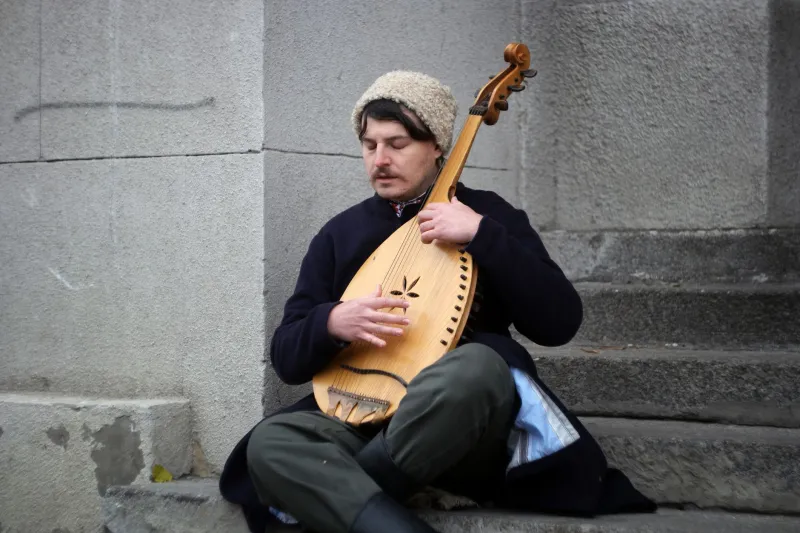
What's coming out of Eastern Europe and the Balkans operates on a completely different set of rules. The melodic structures don't resolve where you expect them to. The time signatures shift in ways that feel natural rather than jarring. And the instruments — the Bulgarian gaida, the Ukrainian bandura, the Serbian tamburica — carry tonal qualities that don't exist anywhere in the standard indie folk toolkit.
"When I use the bandura, it's not a gimmick," says one Ukrainian artist who relocated to Berlin after the war began and has since built a following of over 200,000 monthly Spotify listeners. "It's just the instrument I grew up with. But I understand now that for listeners outside Ukraine, it sounds like something from another world. I think that's actually what they're looking for."
That sense of sonic otherness — something genuinely unfamiliar in a music landscape where most sounds have been thoroughly catalogued and recycled — is a huge part of the appeal. It wakes listeners up.
Melancholy as a Musical Language
There's another element that keeps coming up when American fans try to explain why this music hits them so hard: the emotional weight.
Eastern European and Balkan folk traditions have always carried a particular relationship with grief, longing, and historical memory that doesn't really have an equivalent in American popular music. These aren't songs about personal heartbreak in isolation — they're songs where personal heartbreak exists inside something much larger. A history of displacement. A landscape. A language that might disappear.
For American listeners who've grown up on a diet of individualist emotional narratives, encountering music where feelings exist inside a communal or historical context can feel revelatory. It's not that the emotions are bigger — it's that they're older. They have roots.
"I think American audiences are hungry for music that feels like it comes from somewhere specific," says a music blogger based in Chicago who runs a newsletter dedicated to Eastern European indie. "Not just geographically — emotionally and historically specific. These artists have that in abundance."
TikTok's Unexpected Role
The platform that's been most responsible for surfacing these artists in the US isn't what you might expect. While Spotify's algorithm has certainly played a role, TikTok has been the real accelerant — and not through the usual viral dance challenge pipeline.
Short videos of live performances, often recorded in intimate settings with natural acoustics, have been the format that works. A Bulgarian singer performing in a stone courtyard. A Ukrainian artist playing bandura in what appears to be a kitchen. The rawness of the production context actually amplifies the emotional impact, and American viewers — who are increasingly skeptical of over-produced content — respond to it viscerally.
Comment sections on these videos are full of Americans saying some version of the same thing: I don't know what she's saying but I'm crying. That response, more than any critical endorsement, tells you something important about what this music is doing.
The Multilingual Question
One of the more fascinating aspects of this phenomenon is that the language barrier isn't functioning as a barrier at all. Artists singing in Bulgarian, Ukrainian, or Serbian are finding that American listeners aren't just tolerating the foreign-language lyrics — they're actively embracing them.
Part of this is the K-pop effect. A generation of American music fans who grew up loving artists who sang primarily in Korean has essentially been trained to hear vocals as texture and emotion rather than strictly as linguistic content. That shift in listening habits has opened doors for artists from regions that would have had almost no mainstream pathway into American ears a decade ago.
Some artists are leaning into multilingual approaches — weaving English verses or bridges into otherwise non-English songs — while others are staying fully in their native languages and finding that it doesn't hurt them at all. Both strategies seem to be working, which suggests that the appetite is real and not particularly fragile.
What This Opens Up
For American listeners willing to follow this thread, the rabbit hole goes deep and it goes somewhere genuinely rewarding. The indie artists gaining traction now are drawing from folk traditions that stretch back centuries — traditions that have never really been accessible to Western audiences outside of academic ethnomusicology contexts.
At Kral38 Stream, we've been adding Eastern European and Balkan folk and indie artists to our World Music catalog specifically because this is the kind of music that rewards repeated listening and genuine curiosity. The further in you go, the more you find.
The singer-songwriter genre isn't running out of ideas. It just needed to look somewhere new. And right now, somewhere new is a woman with a bandura in a Kyiv apartment, singing something that will make you feel more than you expected to feel on a Tuesday afternoon.