When Seoul Meets São Paulo: The Genre-Blending Wave That's Quietly Rewiring American Playlists
When Seoul Meets São Paulo: The Genre-Blending Wave That's Quietly Rewiring American Playlists
Pull up your recent listening history. Scroll through it slowly. Chances are, somewhere between that Bad Bunny banger and that BLACKPINK deep cut, there's a track that doesn't quite fit either box — and that's exactly the point. A quiet but seismic shift is happening in the global music landscape, and American ears are right at the center of it.
The K-pop to Latin trap pipeline isn't a marketing gimmick or a label-engineered publicity stunt. It's an organic, producer-driven movement that's rewriting the rules of what pop music can sound like — and who gets to make it.
The Studio Connection Nobody's Talking About
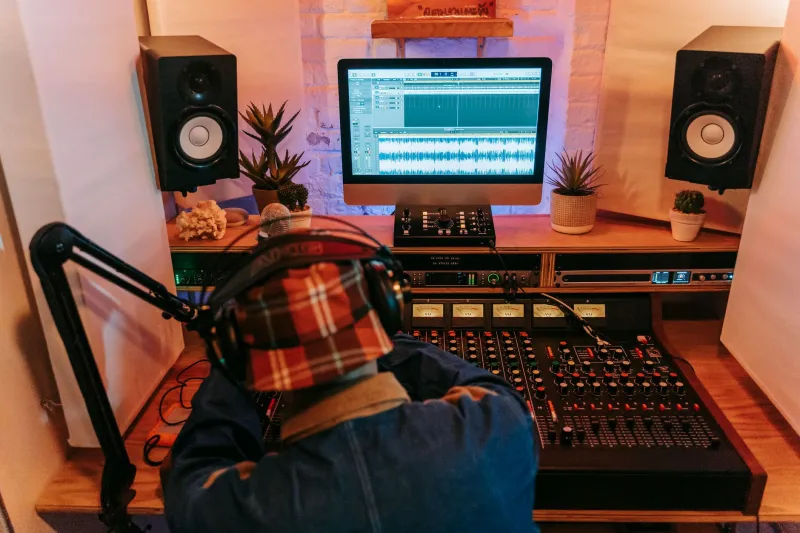
Let's start where all great music starts: the studio. Over the past few years, a growing number of K-pop producers have been quietly embedding themselves in sessions with Latin trap and reggaeton artists, and vice versa. The cultural exchange isn't just happening on stage at award shows — it's happening in the DAW, one plugin at a time.
K-pop production is famously meticulous. Tracks are layered with surgical precision, vocal stacks are engineered to feel both robotic and emotional, and the overall sonic palette tends to lean heavily on bright synths, tight rhythmic programming, and carefully controlled dynamics. Latin trap, on the other hand, brings a rawer, bass-heavy energy — 808s that shake car speakers, melismatic vocal runs that bleed into each other, and a rhythmic looseness that feels spontaneous even when it isn't.
When these two worlds collide in the same session, something genuinely new comes out the other side. Producers from Seoul are picking up on the "dembow" rhythmic skeleton that underpins reggaeton and folding it into their signature sound design. Meanwhile, producers from Medellín and Miami are borrowing the layered vocal processing techniques that make K-pop choruses hit like a wall of sound.
The result? Tracks that feel familiar and alien at the same time — and that's a combination American listeners have proven they absolutely cannot resist.
What the Streaming Numbers Actually Say
Streaming data doesn't lie, and the numbers behind hybrid genre music are genuinely eye-opening. Playlist curators on major platforms have reported that tracks blending K-pop and Latin influences consistently outperform their single-genre counterparts in terms of save rates and skip rates. Listeners aren't just tolerating these hybrid sounds — they're actively seeking them out.
Americans between the ages of 18 and 34 are driving this trend harder than any other demographic. This is a generation that grew up consuming YouTube recommendation spirals, TikTok sound discovery, and algorithm-driven playlist rabbit holes. For them, genre is more of a vibe than a boundary. If a track slaps, it slaps — regardless of whether it was made in a studio in Gangnam or a home setup in Puerto Rico.
Platforms like Kral38 Stream have noticed this shift too. When you're curating world music for a global audience, the most-streamed content increasingly defies easy categorization. The old genre tags are becoming less useful by the month.
The Artists Leading the Charge
You can't talk about this movement without acknowledging the artists who are living it in real time. Groups and solo acts from the K-pop ecosystem have been increasingly open about their admiration for Latin music's emotional directness and rhythmic complexity. Several high-profile K-pop acts have released Spanish-language tracks or collaborated with Latin artists — not as novelty moves, but as genuine artistic statements.
On the Latin side, artists from Brazil, Colombia, and Puerto Rico have been incorporating the kind of polished, multi-layered production aesthetics that K-pop perfected over decades. The influence shows up in everything from vocal arrangement choices to the way music videos are choreographed and shot.
Collaborations between artists from Seoul and São Paulo are no longer headline-grabbing anomalies — they're becoming almost expected. And when these collaborations land on American streaming platforms, they tend to find audiences quickly, partly because the algorithmic infrastructure has gotten very good at matching sounds to listeners who didn't know they wanted them.
Why American Listeners Are Ready for This
There's a cultural context here that matters. American pop music has always been a borrowing machine — rock borrowed from blues, hip-hop borrowed from funk and jazz, pop borrowed from everywhere simultaneously. What's different now is the speed and the directionality. The influences aren't just flowing inward from the rest of the world into American pop. They're flowing laterally between non-American scenes, and American listeners are tuning in as enthusiastic third parties.
The pandemic accelerated this in ways that are still unfolding. Stuck at home, American music fans went deeper into streaming rabbit holes than ever before. K-pop fandoms exploded in size. Latin music's already-massive streaming numbers grew even larger. And somewhere in the middle, a new kind of listener emerged — one who doesn't compartmentalize their taste by geography or language.
For this listener, a hybrid K-pop/Latin trap track isn't a novelty. It's just a good song.
What This Means for the Future of Pop
Here's the big picture take: the genre map is being redrawn, and it's being redrawn by producers and artists who grew up consuming music from everywhere simultaneously. The next generation of pop stars won't think in terms of "K-pop" or "Latin trap" as fixed identities — they'll think in terms of sonic tools available to them, regardless of cultural origin.
For American listeners, this is genuinely exciting news. It means the playlist experience is only going to get richer, weirder, and more surprising. The days of a pop landscape dominated by a handful of clearly defined American genres are fading — not because American music is losing influence, but because the definition of "American music" keeps expanding to include whatever American ears are falling in love with.
And right now, American ears are falling in love with something that sounds like Seoul and São Paulo had a studio session together and forgot to tell anyone.
Keep your playlists open. The best hybrid tracks haven't been made yet.