No Passport Required: How Bedroom Producers in Lagos and Jakarta Are Quietly Rewriting LA's Sound
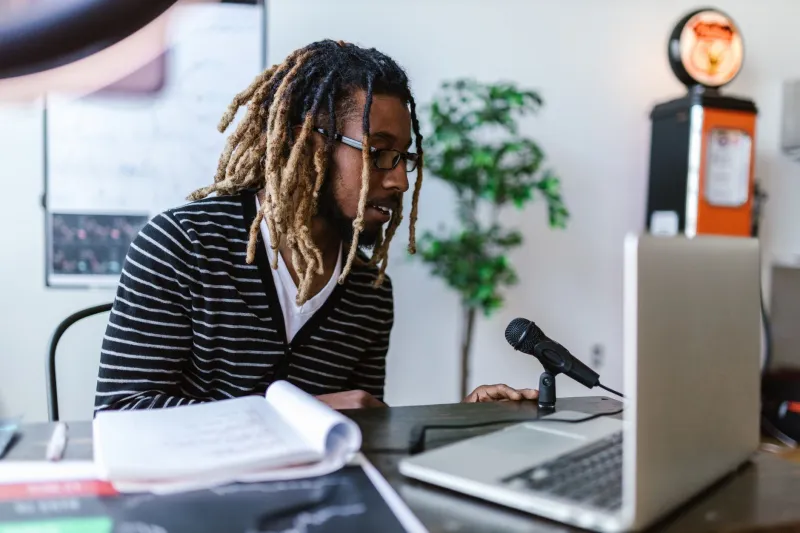
There's a beat playing on a mid-tier American rapper's new single. It hits different — something in the drum pattern feels slightly off-grid in a way that makes you nod harder. The snare has this texture you can't quite name. The melodic loop underneath sounds like it wandered in from somewhere else entirely, somewhere with heat and humidity baked into it. You'd never guess it was made in a two-room apartment in Lagos by a 23-year-old who's never set foot in a recording studio.
That's not a hypothetical. That's Tuesday.
The way music gets made has been quietly dismantled and rebuilt over the last decade, and the people doing the rebuilding aren't always the ones getting the credit. A growing wave of bedroom producers from Nigeria, Indonesia, Ghana, the Philippines, and beyond are directly influencing the sound of American mainstream music — not through label deals or industry connections, but through sheer digital access and raw talent.
The Laptop Is the Studio
The economics of music production changed dramatically when software like FL Studio, Ableton, and GarageBand became either affordable or, let's be honest, easily pirated in markets where $500 software licenses represent months of income. What that meant in practice was that a kid in Nairobi or Bandung with a decent laptop and an internet connection suddenly had access to the same basic toolkit as a producer working out of a $500-an-hour studio in Burbank.
YouTube did the rest. Entire production educations are available for free — mixing tutorials, sound design breakdowns, beat-making walkthroughs from producers who've worked with Drake, Beyoncé, or Kendrick. A teenager in Accra can watch the same content as a music school student in Boston and come away with the same foundational knowledge, plus something the Boston kid doesn't have: a completely different sonic vocabulary shaped by the music they grew up hearing.
That difference is exactly what American artists are paying for.
"I don't try to sound American," says Tunde, a 25-year-old producer based in Lagos who's placed beats with three US-based artists in the past year, all through direct DMs and online marketplaces like BeatStars. "I try to sound like me. And American artists want that. They're tired of hearing the same thing."
The BeatStars Pipeline
Platforms like BeatStars, Airbit, and Traktrain have quietly become the infrastructure for a global beat economy. Producers upload instrumentals, artists browse and license them, and the whole transaction can happen without a single phone call or label intermediary. The top sellers on these platforms aren't all from Atlanta or LA. A significant and growing percentage are based in West Africa, Southeast Asia, and Eastern Europe.
For American artists — especially independent ones who can't afford big-name producers — this marketplace is a goldmine. A beat that might cost $5,000 from an established US producer can be licensed for $50 to $300 from an international producer with comparable skill and a fresher perspective. The math is obvious. The cultural exchange happening underneath that math is what's interesting.
Producers from Afrobeats-heavy markets bring rhythmic sensibilities that are fundamentally different from what's been standard in American hip-hop. The relationship between the kick drum and the bass line, the way percussion is layered, the use of space — these aren't just stylistic quirks. They're reflections of entirely different musical traditions, and they're seeping into American pop in ways that listeners feel but often can't articulate.
Jakarta's Secret Contribution to Your Playlist
Indonesia doesn't come up much in conversations about global music influence, but it probably should. The country has one of the most active and technically skilled communities of electronic and pop producers in Southeast Asia, and a growing number of them are building international client lists through social media and streaming platforms.
Reza, a 27-year-old producer based in Jakarta, started posting production breakdowns on YouTube three years ago. His subscriber count is modest — around 40,000 — but his DMs are full of messages from artists in the US and UK looking to collaborate. He's worked on tracks that have landed playlist placements on major streaming platforms, though he's rarely credited prominently.
"The credit thing is frustrating," he admits. "But I'm building. Every placement teaches me something about what works internationally, and I bring that back into my own sound."
His work blends the clean, melodic sensibility common in Indonesian pop with the harder-hitting production textures that dominate American streaming. The result is something that feels familiar and foreign at the same time — which, increasingly, is exactly what listeners want.
What Gets Lost, What Gets Gained
There are real tensions in this story. When a producer from Lagos sells a beat rooted in Afrobeats tradition to an American rapper who doesn't acknowledge that context, something gets flattened. The cultural DNA in that beat doesn't disappear, but it gets repackaged without attribution. That's a conversation worth having — and one that's starting to happen more openly in music industry spaces.
But there's another side. These producers are building careers, gaining income, and reaching global audiences on their own terms. They're not waiting for a visa, a label scout, or an industry connection. They're using the internet the way it was theoretically always supposed to work — as a genuine equalizer.
And American music is better for their influence. The sonic diversity creeping into mainstream hip-hop and pop over the last several years isn't accidental. It's the sound of a global studio that nobody officially opened but everyone started using anyway.
The bedroom in Lagos doesn't look like a studio. But it sounds like one. And right now, it sounds like the future.