Something Old, Something True: Why Irish Folk Music Is the Emotional Reset America Didn't Know It Needed
We need to talk about what's happening quietly in your Discover Weekly.
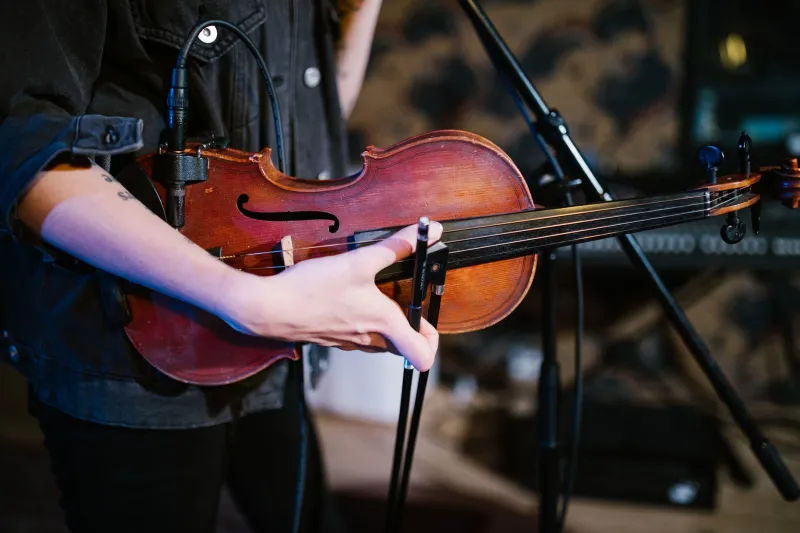
Between the hyperpop and the drill and the algorithmically optimized pop, there's a different kind of track showing up for a lot of American listeners right now. Acoustic guitar or fiddle or uilleann pipes. A voice that sounds like it hasn't been processed within an inch of its life. Lyrics that are actually about something — loss, place, memory, the specific ache of a thing that's gone. And it's coming from Ireland.
Contemporary Irish folk music — not the shamrock-and-jig stereotype, but the living, breathing, emotionally serious tradition being carried forward by a new generation of Irish artists — is having a genuine moment in the US. The streaming data supports it. The playlist growth supports it. And if you've spent any time talking to people in their 20s and 30s about what they're listening to when they need to actually feel something, you'll hear names like Lankum, Lisa O'Neill, and Ye Vagabonds come up with surprising regularity.
This is worth examining, because it's not an accident.
The Noise Problem
Here's the cultural context that makes this revival make sense: American listeners, particularly millennials and Gen Z, are living through a period of genuine sonic and informational overload. The average person's media environment is louder, faster, and more fragmented than anything previous generations navigated. Music has largely followed that trajectory — more drops, more maximalism, more engineered stimulation.
And yet there's a countercurrent. The same generation that streams hyperpop also made Phoebe Bridgers a household name. They made "Sling" by Clairo a word-of-mouth phenomenon. They filled venues for Adrianne Lenker. There's a consistent appetite, running alongside the maximalist mainstream, for music that creates space rather than filling it — music that trusts the listener to sit with something uncomfortable.
Irish folk, at its best, does exactly that. It doesn't resolve things neatly. It holds grief and beauty in the same breath. It has a relationship with darkness — historical, personal, communal — that doesn't flinch or wrap itself in uplift. For listeners exhausted by the emotional performance of mainstream pop, that honesty is practically medicinal.
The Artists Carrying the Tradition Forward
The contemporary Irish folk revival isn't a nostalgia project. The artists driving it are deeply aware of tradition while refusing to be imprisoned by it.
Lankum is probably the most significant band in this space right now. The Dublin four-piece takes traditional Irish songs and stretches them into something that sounds closer to drone music or experimental folk — long, hypnotic, genuinely unsettling in the best way. Their album "The Livelong Day" introduced them to a significant American audience, and "False Lankum" has only deepened that connection. They've toured the US multiple times now, and their shows are selling out in cities that wouldn't have known what to do with them five years ago.
Lisa O'Neill is a Cavan-born singer-songwriter whose work sits at the intersection of traditional sean-nós singing and contemporary folk composition. Her voice is one of the most distinctive in any genre right now — raw, unadorned, and capable of conveying emotional shades that more polished singers can't access. American listeners who've found her tend to describe the experience as something close to a gut punch.
Ye Vagabonds — brothers Brían and Diarmuid Mac Gloinn from Carlow — make close-harmony folk that references the tradition without being reverent about it. Their arrangements are spare and precise, and their songwriting has a literary quality that rewards close listening.
None of these artists are household names in the US yet. But they're building real fanbases, and the trajectory is clearly upward.
What the Playlist Data Actually Shows
Spotify's editorial team has been quietly expanding its investment in Irish and Celtic folk playlists over the last two years, and the engagement numbers have reportedly surprised even the platform's curators. Tracks that would previously have been siloed in niche "world music" or "Celtic" categories are showing up in broader folk and indie-adjacent editorial placements — and they're performing.
The demographic breakdown is telling: the fastest-growing listener segment for contemporary Irish folk on major streaming platforms in the US is 18-34 year olds. This isn't your grandmother's Celtic music moment. These are listeners who also stream Mitski and Julien Baker, who are drawn to emotional directness and acoustic intimacy, and who are actively seeking music that feels like it was made by a human being with something at stake.
The TikTok angle here is different from, say, funk carioca or Afrobeats. Irish folk doesn't typically go viral through dance challenges. It goes viral through the "songs that make you cry" and "music for 3am" content ecosystems — videos of people describing what a song did to them, or clips of artists performing in small rooms that somehow feel enormous. The emotional testimony format suits the music perfectly.
Grief, Storytelling, and Why It Translates
There's something specific about the Irish folk tradition's relationship with loss that resonates across cultural contexts. Ireland has a long history of having to hold grief publicly — famine, emigration, political violence, the slow erosion of language and community. The music that emerged from that history developed sophisticated emotional tools for processing collective and individual pain without either suppressing it or being consumed by it.
American culture, by contrast, has often struggled with grief — rushing past it, reframing it as resilience, turning it into content. For listeners who feel that inadequacy, music that actually knows how to sit with sorrow without resolving it prematurely can feel like a revelation.
This isn't about cultural tourism or aesthetic borrowing. It's about a genuine emotional need finding a tradition that has the tools to meet it.
How to Actually Get Into This
If you're curious and don't know where to start, here's a practical entry point: search Lankum on Spotify and listen to "The Wild Rover" from their first album. Then follow the "related artists" trail. Ye Vagabonds will come up. So will Lisa O'Neill, and possibly Cormac Begley, and maybe Paul Brady if you want to go deeper into the tradition.
Give it a few listens before you decide how you feel. This is music that reveals itself slowly, which is part of the point.
In a cultural moment defined by instant gratification and maximum stimulation, music that asks you to slow down and feel something complicated is a genuinely radical offer. Ireland has been making that offer for centuries. America is finally saying yes.