They Don't Know the Words — And That's the Whole Point: Inside the New Wave of Cross-Language Collabs Reshaping American Hits
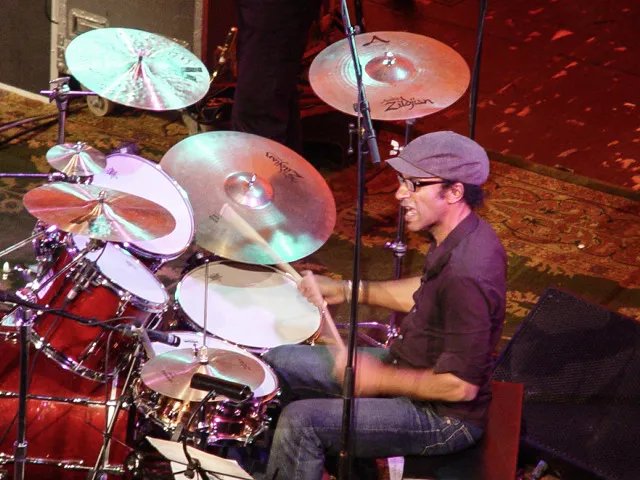
Photo: Hreinn Gudlaugsson, CC BY-SA 4.0, via Wikimedia Commons
There's a moment in certain studio sessions that producers describe as almost mystical. A vocal sample comes through the speakers — maybe it's in Yoruba, maybe Tagalog, maybe Brazilian Portuguese — and nobody in the room knows exactly what's being said. But the feeling? Everyone gets the feeling immediately. That's when the track starts building itself.
American music has always borrowed from everywhere. Blues absorbed West African rhythmic structures. Jazz pulled from Caribbean traditions. Hip-hop sampled the world before the world had a streaming platform. But something different is happening right now, and it goes beyond borrowing. US artists aren't just sampling international music — they're actively collaborating with artists whose language they don't share, leaning into the ambiguity as a creative feature rather than a barrier to work around.
The Phonetic Hook Era
Producers working in pop and hip-hop have started talking about what some are calling the "phonetic hook" — a vocal phrase in a non-English language that lands emotionally before the listener processes it intellectually. The sounds carry feeling. The rhythm of the words creates texture. Whether you understand the literal meaning almost becomes secondary.
This isn't entirely new — think of how Paul Simon worked with South African musicians on Graceland, or how David Byrne collaborated with Brazilian artists for Rei Momo. But those were deliberate world music crossover projects, framed as such. What's happening now is different. The cross-language element is embedded inside mainstream pop, hip-hop, and R&B without being flagged as a "world music" moment. It just sounds like the song.
Hits built around Afrobeats production — which often layers Pidgin English, Yoruba, and other Nigerian languages over beats designed for American club floors — are the clearest current example. Artists and producers who don't speak those languages have absorbed the sonic vocabulary and are building around it, sometimes in direct collaboration with Nigerian artists, sometimes through sampling, sometimes through a kind of stylistic influence that blurs into mimicry depending on who you ask.
When the Process Works
When these collaborations are done thoughtfully, the results can be genuinely extraordinary. Consider how producers who work across the Afrobeats-to-American-R&B pipeline describe their process: they're not translating lyrics — they're translating energy. The goal is to understand what a vocal performance is doing emotionally and rhythmically, and then build a production architecture around that without flattening it into something generic.
Latin music's journey into the American mainstream offers a useful case study. Producers like Tainy and J Balvin collaborators built sounds that were rooted in reggaeton's Puerto Rican tradition but designed to function in the American streaming ecosystem. English-speaking artists who jumped on those tracks often didn't speak Spanish fluently — but they understood the vibe architecture well enough to contribute authentically. The result was music that felt genuinely bilingual rather than translated.
Similar dynamics are playing out now with Amapiano from South Africa, which has its own vocal traditions and rhythmic language. US producers are licensing Amapiano instrumentals, bringing in South African vocalists for hooks, and then building English-language verses around them. The South African artists get meaningful exposure and revenue. The US artists get a sound that doesn't exist anywhere else. When everyone's compensated fairly and credited properly, it works.
The Appropriation Question Isn't Going Away
Let's be honest about the tension here, because it's real. When a major American label artist samples a traditional vocal from a culture they have no connection to, slaps their name on the track, and collects the streaming revenue while the original artist gets a small licensing fee and no credit, that's a problem. And it happens more than the industry likes to admit.
The streaming era has made sampling both easier and murkier. You can find an obscure track from a musician in Thailand or Nigeria, clear a sample through a third-party service, and have it on a major release without the original artist ever knowing they're on a hit song. The legal boxes get checked. The ethical ones often don't.
Producers who are doing this right talk about the importance of going back to the source — not just licensing a sample but actually bringing the original artist into the project, sharing writing credits, and making sure they're part of the story when the song succeeds. That requires more effort and usually more money upfront, but it's the difference between a collaboration and a transaction.
What This Sounds Like on Your Playlist
For listeners, the experience of all this is mostly seamless — which is part of what makes it interesting. You're streaming a track that sounds like American pop radio but has a Ghanaian percussion pattern, a verse recorded in Lagos, and a hook that switches between English and Twi. You might not even register the language shift consciously. You just know the song hits.
That's the new texture of American popular music in the streaming era. The borders are porous in both directions — American artists are absorbing global influences faster than ever, and international artists are building careers partly by making themselves legible to American audiences while staying rooted in their own traditions.
At Kral38 Stream, we think that's worth paying attention to — not just as a trend story but as a genuine shift in what American music is and where it's going. The language barrier didn't disappear. It just stopped being the point.
The Bottom Line
The best cross-language collaborations aren't about one culture absorbing another. They're about two creative traditions finding common ground in sound — in rhythm, in feeling, in the phonetic texture of a vocal that hits you before you know why. When that happens with honesty and mutual respect, the result is music that genuinely couldn't have existed any other way. That's worth celebrating, even when the conversation around it is complicated.