Rio Exported a Rhythm and TikTok Did the Rest: The Funk Carioca Takeover
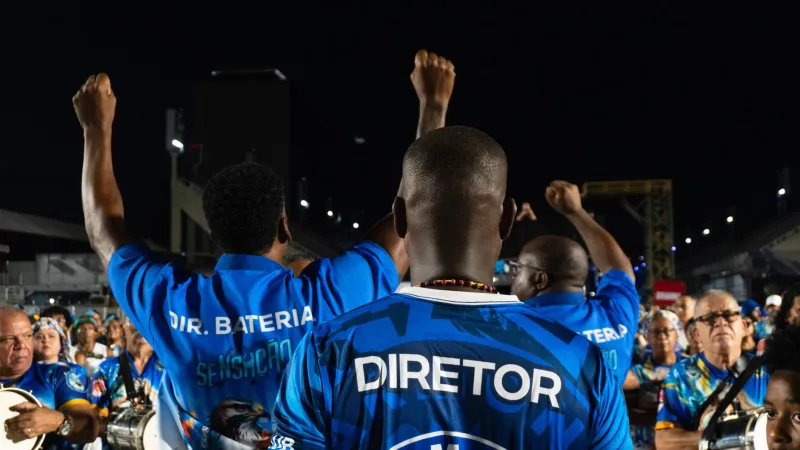
Somewhere between a dance challenge and a late-night scroll, millions of American teenagers fell in love with a sound they couldn't quite name. It hit hard, moved fast, and felt like nothing else in their feeds. That sound had an address: Rio de Janeiro.
Funk carioca — sometimes just called baile funk — has been pulsing through Brazil's favelas since the late 1980s. It grew out of Miami bass and Miami booty music, got filtered through Rio's street parties, and came out the other side as something entirely its own. Heavy 808s, call-and-response vocals, relentless tempo, and lyrics that pull no punches. For decades, it was a local phenomenon that the Brazilian mainstream kept at arm's length. Then TikTok happened.
How a Rio Street Party Became a Global Feed
The short-form video era didn't discover funk carioca — it amplified something that was already irresistible. The genre's DNA is built for virality. Short loops, punchy hooks, and an almost aggressive rhythmic momentum make it perfect for 15-second clips. When a track lands in the right dance challenge, it doesn't just spread — it explodes.
Anitta was the first major bridge. The Rio-born pop star spent years carefully positioning herself at the intersection of funk, pop, and reggaeton, and when "Envolver" hit number one on Spotify's Global Chart in early 2022, it wasn't just a career milestone — it was a signal flare. American listeners who'd never thought about Brazilian music suddenly had a reference point. Playlist editors took note. Algorithm gods smiled.
But Anitta is the polished version. The deeper funk carioca story lives with producers like DJ Yuri Martins and MC Hariel, artists who built massive audiences in Brazil without ever chasing crossover appeal. Their tracks started appearing in American TikTok videos almost organically — someone in Atlanta used a clip, someone in LA stitched it, and suddenly the song had 40 million views from people who couldn't tell you what state Rio de Janeiro is in.
The Dancers Who Moved the Culture
You can't talk about funk carioca's TikTok moment without talking about the dancers. The genre has always had a physical vocabulary — specific moves tied to specific tracks, a whole choreographic culture built around baile funk parties. When those dances hit TikTok, they brought the music with them.
Creators like @funkdancer_br and a wave of Brazilian-American content makers started translating the baile funk floor to the phone screen. The footwork, the hip isolations, the communal energy — all of it translated surprisingly well to vertical video. And because the dances looked genuinely difficult and satisfying to learn, they generated exactly the kind of aspirational engagement that keeps a trend alive on the platform.
American creators started attempting the moves, tagging Brazilian originators, and creating a cross-cultural feedback loop that felt genuinely mutual rather than extractive. That's rarer than it sounds, and it matters for the genre's long-term foothold in US culture.
Why American Labels Are Scrambling
Here's where it gets interesting from an industry perspective. Major labels have historically been slow to recognize Brazilian music as a commercial opportunity in the US market. Reggaeton took years to get the infrastructure it deserved. Afrobeats had to build its own ecosystem before the majors showed up. Funk carioca looks like it might move faster.
Several A&R teams at major labels have quietly stationed scouts in São Paulo and Rio over the last 18 months. The streaming numbers make the case better than any pitch deck. Brazilian artists are consistently appearing in US editorial playlists — not just on "global" or "world music" tiles, but in mainstream pop and hip-hop spaces. When an artist from Rio shows up on "New Music Friday" without any label muscle behind them, that's a market signal.
The signing frenzy hasn't fully materialized yet, but the conversations are happening. The challenge for labels is that funk carioca's most authentic voices aren't necessarily interested in the kind of softening that major label pop often demands. The genre's rawness — its explicit lyrics, its favela politics, its refusal to be respectable — is precisely what makes it magnetic. Sanitize that and you lose the thing people are actually responding to.
Summer Soundtrack or Lasting Genre?
Every few years, a new international genre gets the "summer of" treatment in American media. Reggaeton had its moment. K-pop had its moment. The question with funk carioca is whether it becomes a permanent fixture or a trend that fades when TikTok moves on to the next thing.
The honest answer is: probably both, and that's fine. The artists who survive trend cycles are the ones who build genuine American fanbases — people who go to shows, buy merch, follow careers. Anitta has that. A handful of emerging artists are building it. The infrastructure for Brazilian funk in the US is still thin, but it's thickening.
What's different about this moment compared to previous Brazilian music crossovers — bossa nova in the '60s, axé in the '90s — is the directness of the pipeline. There's no intermediary telling American listeners what Brazilian music is supposed to sound like. The algorithm serves up the raw product and people decide for themselves. And increasingly, they're deciding they want more.
For anyone who hasn't gone down the rabbit hole yet: start with Anitta's back catalog, then find MC Hariel, then let Spotify's autoplay take you somewhere surprising. Your feed is about to get a lot more interesting.